Embrace Inclusion: See the Learner, not the Label online workshops
Workshop title: See the Learner, not the Label: Building inclusive classrooms
Workshop lead: Sarah Wilkinson, West Kirby Educational Trust, Head of Inclusion & Clinical Services
🎯 Aim: This programme of 2 online workshops will help you develop the knowledge, confidence and practical strategies, to create inclusive classrooms where every learner can access learning, participate and thrive. Aimed at education professionals.
🗓️ Dates: Monday 16th & 23rd November
⏰ Time: All sessions run from 3.45-5.15pm.
Cost: £60 per person for the complete programme. Includes session, handouts and recommended resources/reading. Payable by invoice prior to training. Link will be shared.
Useful information:
- Joining link will be shared after sign up
- For more information email embrace@wket.co.uk
Programme information below:
Session details
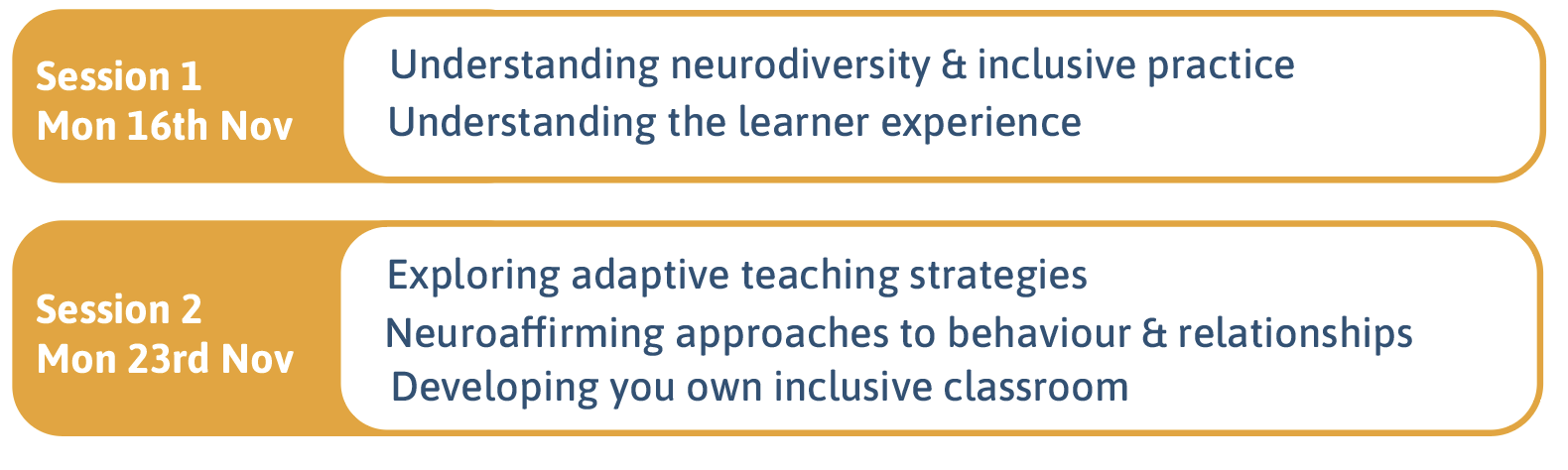
Session 1 - Mon 16th Nov
Understanding neurodiversity & inclusive practice
- Understand the concept of neurodiversity, explore what is meant by neurodivergent and neuro-affirming
- Recognise the limitations of stereotypes and diagnostic labels
- Consider the importance of strengths, identity, autonomy and pupil voice
Understanding the learner experience
- Recognise potential sensory, cognitive, communication and environmental barriers
- Understand executive functioning differences
- consider how classroom experiences may differ between learners
- identify ways of reducing iunnecessary barriers
Session 2 - Mon 23rd Nov
Exploring adaptive teaching strategies
- Identify teaching practices that reduce unnecessary barriers
- apply principles of explicit instruction, modelling and scaffolding
- explore strategies that support executive functioning and communication; recognise that many neuro-affirming approaches benefit the whole class
Neuro-affirming approaches to behaviour and relationships
- Consider behaviour within the context of the learner and the environment
- Recognise possible signs of overload or dysregulation
- Explore relational and regulation-informed responses
- Maintain high expectations while maintaining pupil dignity
Develop your own inclusive classroom
- Evaluate your current classroom practice
- Identify strengths and barriers
- use pupil voice to inform practice
- develop a realistic action plan
- identify how progress will be evaluated

Download the flyer below